The machine must endure.
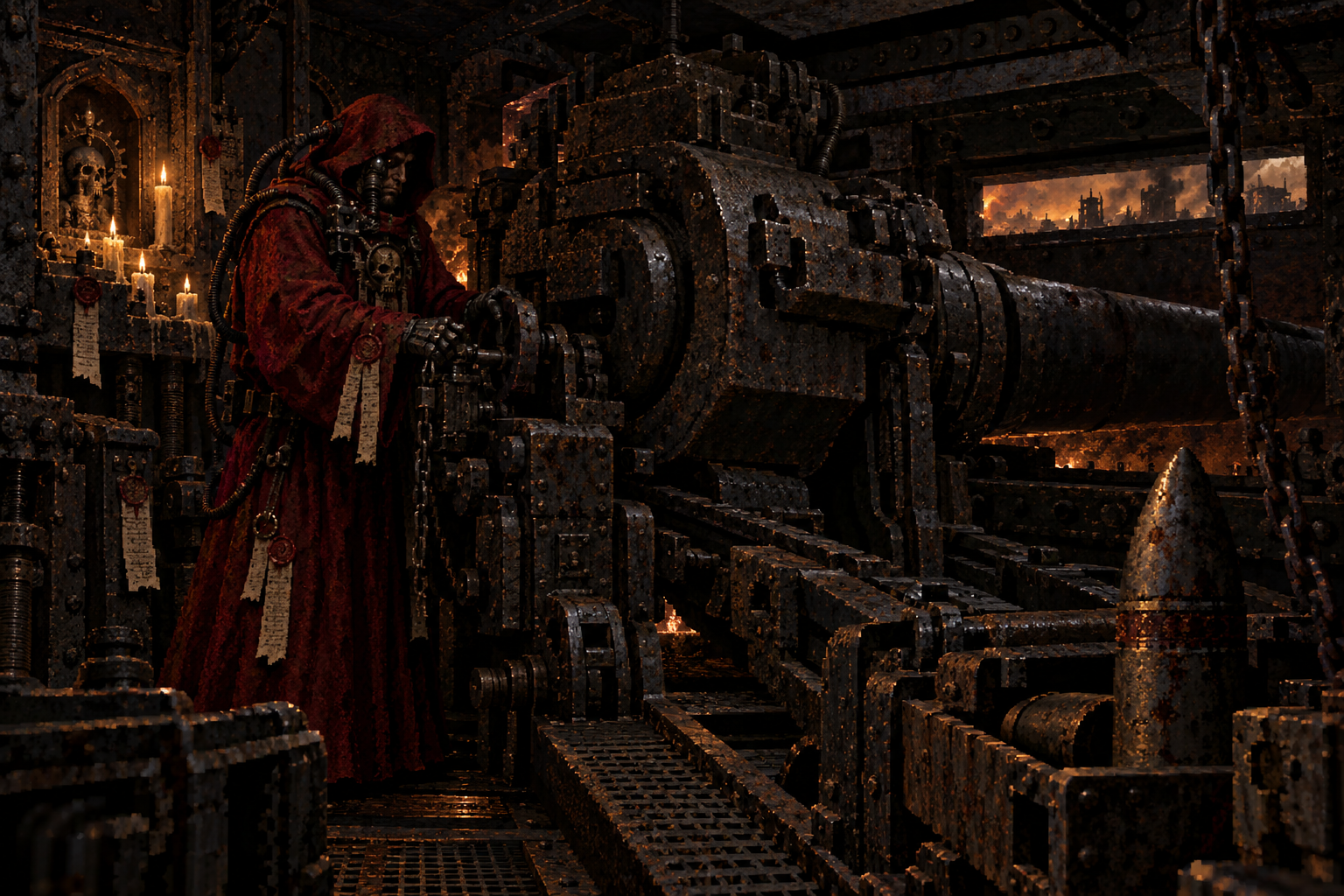
The full game is planned below. This build includes eleven cramped areas on one staggered deck, current-hall lighting, eight longer narrow outdoor slit cones, eight stations, a moving introduction, captured blade/pistol aim, readable priest captions and diverse fitted instruments, physical shrine hands and conducted engine listening. Frequent growing wounds admit small and larger intruders: enter first person, cut with the red blade or aim the finite-ammunition pistol, then bind their sources. Coupled maintenance, crew intervention, personal corruption, three crossings, repair stops, local saves, original audio candidates and measured coolant relief remain live.
Final character art, dense environment production, contact animation, broader campaign hubs and final sound have not passed creative approval. Cinematic and narrated gameplay production remains behind demo approval.
Within the iron
You are the Enginseer-Custodian of Vigilant Remains, a custom relic siege tank. Its commander drives and directs the battle; the gunner aims; the loader feeds the weapon. A Writ of Sacred Custody gives you the final religious veto. The four-person pattern and writ are original campaign fiction.
The watch turns on preparation. Isolate a feed before anointing it. Restore coolant before a hot circuit ruins the engine. Attend a crew lapse before it becomes a route for something else. Parts buy time but omit observance; a complete rite costs more time and reagents. The crew can be replaced. The relic cannot.
How to play
Click a station to walk there, or use WASD. E attends a nearby station. F changes between overhead and first person at your actual location. Turn with left/right arrows, or Shift-click the floor in overhead. With free hands, drag to look. Q raises the selected weapon and captures mouse aiming around a centred crosshair; Q holsters and returns the cursor. 1 raises the red blade; 2 raises the pistol. Click or Space attacks; V cuts even during pistol reload. R reloads the pistol. If capture is refused, the fight pauses until you take your grip or select right-drag aiming. An intruder strike draws and faces the attacker automatically. Escape releases aim and pauses. Approach an empty blight wound and hold E or its cautery contact to bind it; killing a creature leaves the source open. Read the material witness and drag the fitted instrument: different stations respond to swing, speed, weight, pressure or mechanical order. Escape pauses. Sound starts from your Begin gesture unless previously switched off.
Start with the Motive Altar: the tank is already crawling under covering fire, with the first office protected from campaign losses. After it answers, watch the gauges and read the omens. Slack the weighted motive drive, regulate the bearing’s oil film, close the cup and return the load in small detents. Sealing a fresh wound before its first creature emerges saves ammunition and an interruption. At the shrine, swing the censer until all five wax witnesses turn ivory, then bring it to rest. At the vox, steady the incense, hold a challenge until the sealed pins move, then trace their impressed order with the weighted stylus. An answer without physical motion is no witness. Correct crew quickly. At repair stops, requisition supplies and replace unsuitable specialists. Complete all three crossings.
Try the offices in a separate practice watch: guide the loader’s shell and collar, steer the gunner’s sight, settle the recoil weight, follow the cooling band and govern the commander’s march. Practice keeps its costs and physical consequences without overwriting the saved campaign.
Three forces, one narrow interior
Enemy fire damages the hull and raises weapon demand. Ash, heat, pressure and worn parts produce mechanical cascades. Chaos exploits crew lapses, false vox traffic, failing shrine seals and the priest’s own augmetics. A damaged system need not be corrupted.
Lore and provenance
The research distinguishes inspected official pages, licensed publisher descriptions, limited search excerpts and original invention. The core premise follows the Mechanicus’s ritual maintenance of ancient machinery; the precise rites and campaign rules are newly authored.
Start with Warhammer’s Mechanicus introduction, the tank design studio’s account, and Church of Steel’s vehicle and machine-spirit scope. The full dossier records 19 source entries and access limits.
All runtime geometry is original procedural foundation work. Three.js is reused under its MIT license. Key art was generated for this project from the documented brief; AudioX generated the seven original mechanical samples. Reference screenshots and copyrighted game assets are not shipped.
Unofficial Warhammer 40,000 fan concept. No official endorsement. Diablo I is an art-direction reference; no Blizzard assets are included.